












6 Signs Your Cat Needs More Mental Stimulation and Enrichment


Have you recently spotted your furry friend wandering around restlessly and wondered if your cat is feeling bored? Well, even though cats have a reputation for being independent, they still need plenty of mental stimulation to keep them happy.
Our domestic cats’ wild ancestors spent hours exploring, watching, hunting, and problem-solving – so when those instincts don’t have an outlet, frustration and stress can often creep in. This is especially true for indoor cats, who don’t always have access to the same variety of smells and textures the outdoors naturally provides.
Fortunately, here at FELIWAY®, we know a thing or two about providing stimulation for cats to support their emotional well-being! Here are six signs your cat needs more mental stimulation, plus tips on how to help a bored cat in a positive, enriching way.
1. Cat Scratching & Other Destructive Behaviors Around the Home
Scratching is a normal feline behavior, but if your cat suddenly starts targeting the sofa, carpets, or curtains, it may be a clue that they’re seeking an outlet for pent-up energy. A cat who is feeling unstimulated might scratch more intensely or in unusual locations as a way to relieve boredom or express frustration. It can help to think of it like finding their own entertainment.
Before assuming your cat is bored, however, always rule out any environmental stressors. For example, recent changes in your home’s layout or a new baby in the household can cause stress and intensify unwanted behaviors too.
How to Help Cats with Destructive Scratching:
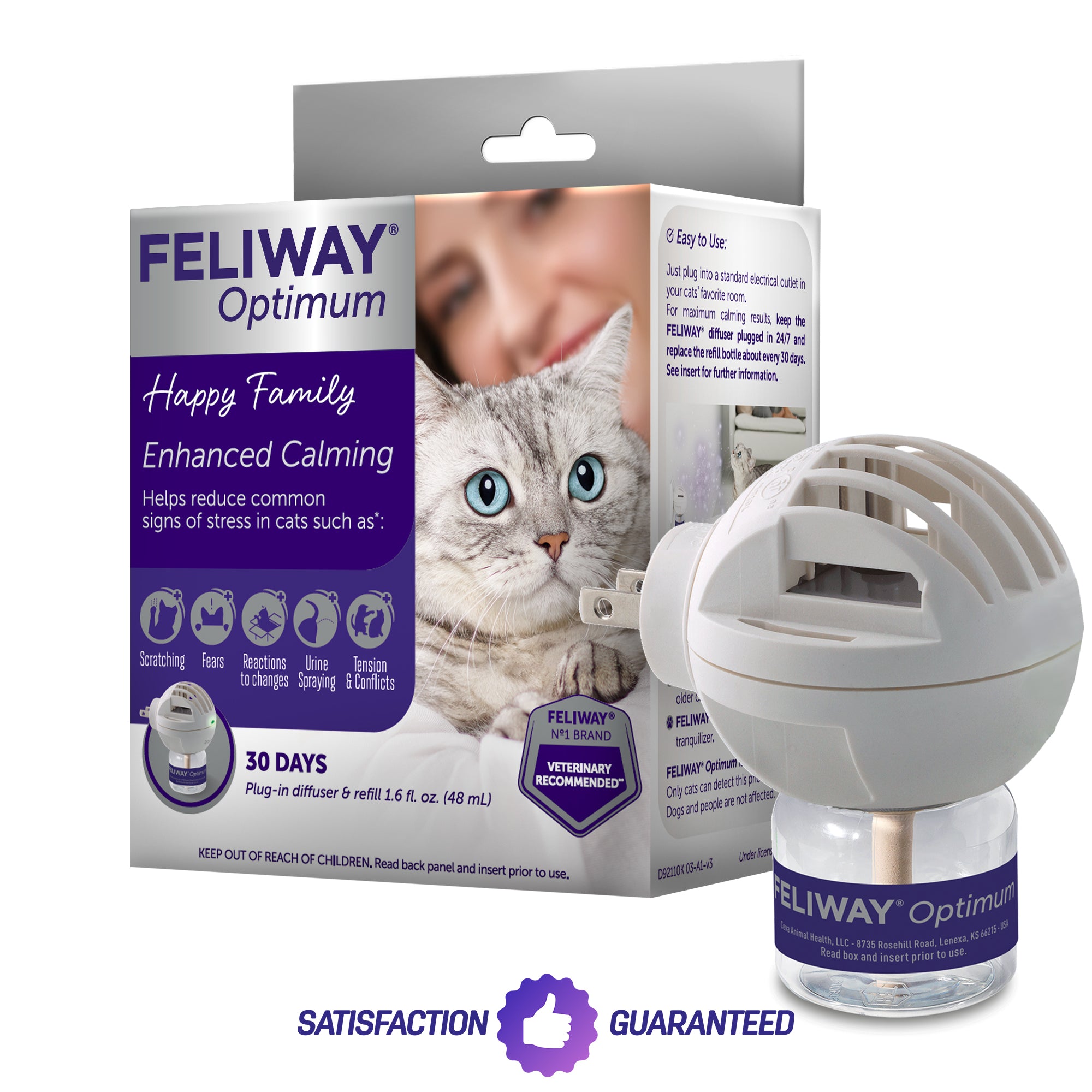
Offer dedicated scratching posts or objects, climbing shelves, and regular interactive play sessions. A FELIWAY® Optimum diffuser in your cat’s favorite room can help them feel more secure and settle more easily.

2. Excessive Grooming or Repetitive Behaviors
Overgrooming, licking the same patch repeatedly, pacing, or tail-chasing can all appear when your cat is lacking appropriate outlets for their natural instincts. When a cat lacks mental stimulation, they may develop these repetitive behaviors as a coping mechanism.
At the same time, overgrooming can also be linked to discomfort or medical issues, so any new or escalating behavior should always be checked by a vet.
How to Help Cats with Repetitive Behaviors
Creating sensory enrichment stations can offer healthier outlets for cats to display their natural instincts. Puzzle feeders, scent-based toys, tunnels, and even a few brain games for cats can work well.
3. Constant Meowing or Attention-Seeking
Does your cat meow at you while you’re working, knock items off the table, or try to climb across your laptop? These attention-seeking tactics often signal that your cat is craving interaction or variety.
Indoor cats especially may vocalize when their day lacks novelty. They might simply be telling you: “I’m bored – do something with me!”.
How to Help When Your Cat is Seeking Attention
Build structured routines for play, feeding, and calm bonding time with your cat. Providing predictable activities helps your cat feel secure, which can be boosted further still when supported by FELIWAY® Optimum.
4. Restlessness, Pacing, or Cat Zoomies
A cat who roams from room to room, paces, or experiences frequent bursts of high-energy ‘zoomies’ may need more opportunities to fulfil their natural hunting instincts. Cats are wired to observe, stalk, chase, and pounce. And when there isn’t enough mental stimulation for cats, restless energy can build up.
How to Help Restless Cats
Daily play is essential – and a feather wand toy is just as good as the real deal when it comes to offering your cat the chance to unleash their hunting instincts. Even if your cat just watches the toy, this still offers valuable mental engagement, much like a wild cat observing their prey.
Remember to frequently rotate toy types and alternate play styles to keep things exciting.

5. Pouncing on Feet or Hands
Although it may seem playful, pouncing at feet or grabbing your hands is a sign your cat is seeking a hunting outlet. And what feels cute in a kitten can become painful in an adult cat, so it’s important not to encourage this behavior.
If your cat has started doing this suddenly, and especially if it seems intense or difficult to interrupt, seeking guidance from a qualified behaviorist is recommended.
How to Help When Your Cat is Pouncing at You
Redirect your cat’s hunting behavior with toys, not hands. Provide regular interactive sessions that mimic the stalk-chase-catch sequence. Brain games for cats, such as hiding treats or using puzzle toys, can also channel this instinct safely.
6. Lethargy, Disinterest, or Oversleeping
On the opposite end of the scale, a bored cat may become quieter or less interested in normal activities like playing, grooming, or interacting with you. Cats naturally sleep a lot, but a noticeable increase in rest, paired with skipped play opportunities, can raise the question: how to help a bored cat who has lost enthusiasm?
How to Help a Disinterested Cat
Building predictable routines and supporting your cat’s emotional well-being with FELIWAY® Optimum can help gently re-awaken their curiosity.
You can also try increasing variety in their environment: new climbing spaces, window perches, activity feeders, scent enrichment, and gentle training sessions all work well. Even sitting together for quiet bonding time helps strengthen your connection.
Daily Enrichment Matters – Simple Ideas to Try
Making your cat’s mental stimulation part of your daily routine not only prevents boredom but helps your cat feel more confident and resilient during changes or challenges. Try out these simple enrichment ideas:
-
Rotate toys every few days so they stay exciting
-
Offer DIY foraging games using cardboard boxes or paper
-
Provide vertical space and safe hiding spots
-
Introduce new scents (catnip, silvervine, or even outdoor objects brought inside)
-
Incorporate short training sessions using plenty of positive reinforcement
And remember, a little variety can go a long way – even just changing out the flavors of your kitty’s favorite treats! For cats who love Happy Snack® by FELIWAY, why not try out both flavors available? Our lickable calming treat currently comes in delicious chicken or salmon flavors, with more options potentially coming soon… keep your eyes peeled for the latest updates!
Of course, supporting your cat emotionally is just as important as physical play, and the good news is that small changes can make a big difference. By offering meaningful stimulation for cats, you can help your feline live a happier, more fulfilled life.
For more expert tips on how to help a bored cat, explore the other articles in our blog, and sign up to our newsletter to stay updated with the latest advice and resources.