








Can Stress Affect My Cat? A Happy Cat Expert Explains!


Cats are wonderful companions, but sometimes our expectations don’t align with their natural needs.
As responsible pet parents, it’s important to understand why cats get stressed and how to balance their environment with their natural instincts. With more people becoming cat parents, understanding their needs and supporting their well-being is more important than ever to safeguard their happiness.
But don’t worry. No one is born knowing how to speak cat. It’s a unique language that takes patience and effort to learn as we are different to our feline friends. In this article, we’ll explore the common causes of stress and practical ways to help a stressed cat.
Do Cats Get Stressed?
Absolutely! Cats do get stressed. Most cats are extremely tolerant of living an indoor life. Most pet cats are classified as domestic or mixed breed, with strong links to their feral ancestors. Pet cats are really only semi-domesticated. Understanding this helps to make sense of their needs and instincts.
Cats are crepuscular, most active at dawn and dusk, which is the prime time for hunting! Although hunting is an ingrained trait for every cat, they also can recognize that they are prey themselves due to their size and vulnerabilities. This creates a strong drive for self-preservation and constant alertness, which can make cats more sensitive to stress due to their environment.

Why Do Cats Get Stressed?
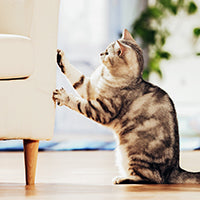
Cats can get stressed when their natural kitty behaviors like scratching, ambush hunting and seeking elevated spaces for safety aren’t being met. These instincts are important for their mental and physical well-being, but they can be problematic for us. Damaged furniture, scratches and broken items from cats jumping up can be frustrating.
However, these feline behaviors should not be suppressed. Failing to provide a safe outlet for these behaviors can result in increased stress, conflict and even behavioral issues. Over time, this stress can affect your cat’s health and strain your relationship or, in some cases, lead to re-homing or surrender.
Can Stress Affect a Cat?
Yes, just like humans, stress can have an impact on cats. When cats are unable to express their natural instincts, frustration and anxiety are common. This triggers their sympathetic nervous system, also known as their fight and flight response. Emotional stress can also manifest as physical issues.

What are Possible Physical Signs of Cat Stress?
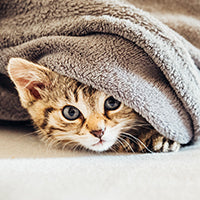
Cats may show signs such as hiding away more or scratching household items when they are feeling stressed, but you may also find other physical signs such as:
-
Overgrooming, leading to hairballs
-
Gastric issues like vomiting and diarrhea
-
Eliminating outside the litter box
-
Feline Idiopathic Cystitis (FIC).
How to Help a Stressed Cat
Stress in cats is common. It can be hard for them to express their natural behaviors, they don’t get to choose when or what to eat, they may have little opportunity to roam or scratch or use their hunting skills.
There are many ways to help a stressed cat that don’t have to be difficult or costly. Most of the time it involves us adjusting our expectations!
Start by thinking of their five senses to mimic the world they’re naturally adapted to:
Sight
Did you know that cats are partly colorblind? This means that they detect movement more than colors. Play games mimicking how prey moves to capture their attention or toss treats to chase to provide an outlet for their hunting drive.
Providing resting or sleeping spots near windows so they can observe the world go by can also stimulate their vision.
Sound
Cats have extremely sensitive hearing, with 32 muscles in their ears so each ear can move independently to detect tiny sounds of prey. During play sessions, rattle your toy quietly and then pause to mimic prey moving and freezing when it detects a predator, before waiting to move again when they think it it’s safe.
Cats also dislike loud, mechanical noises, so playing calming music can help soothe them and block out other sounds that may be causing stress.

Touch
Cats’ paws have a remarkable ability to feel vibrations of their prey moving through the ground. This makes them struggle to tolerate things such as having their nails clipped. It’s important to note that for safety reasons, cats should not have their nails clipped.
Cats need to be gradually desensitized to having their paws touched, ideally from when they are kittens. Additionally, not all cats can tolerate the intensity or duration of petting we often desire, which can lead to tension, biting or scratching.
Always respect your cat’s option to consent. Check in with them during any petting, and if they don’t ask for more attention, it’s best to leave them be.
Taste
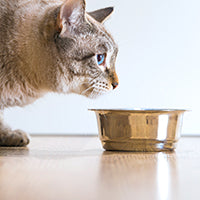
As obligate carnivores, cats can’t taste sweetness and are drawn to umami, protein and fat in their diets. Some cats prefer crunchy food, while others love wet food.
Every cat is different, so understanding your cat’s food preferences can help improve their happiness. Most cats prefer the same food and don’t like change. If your cat is ‘fussy’ and constantly goes ‘off’ their food, they may be struggling with gastric issues like nausea or cramps, and a vet visit is recommended.
Smell
Smell is often overlooked, but it’s essential to a cat’s happiness. Stimulating their sense of smell can help to regulate their emotions and is a great way to help a stressed cat.
Cats enjoy scent work, just like dogs! So, consider using scent-based toys (such as catnip filled toys) or activities to help keep their mind busy. Play With Your Cat by Mikel Delgado PhD is an amazing manual on bringing your cat’s natural instincts to life in a safe and convenient way.
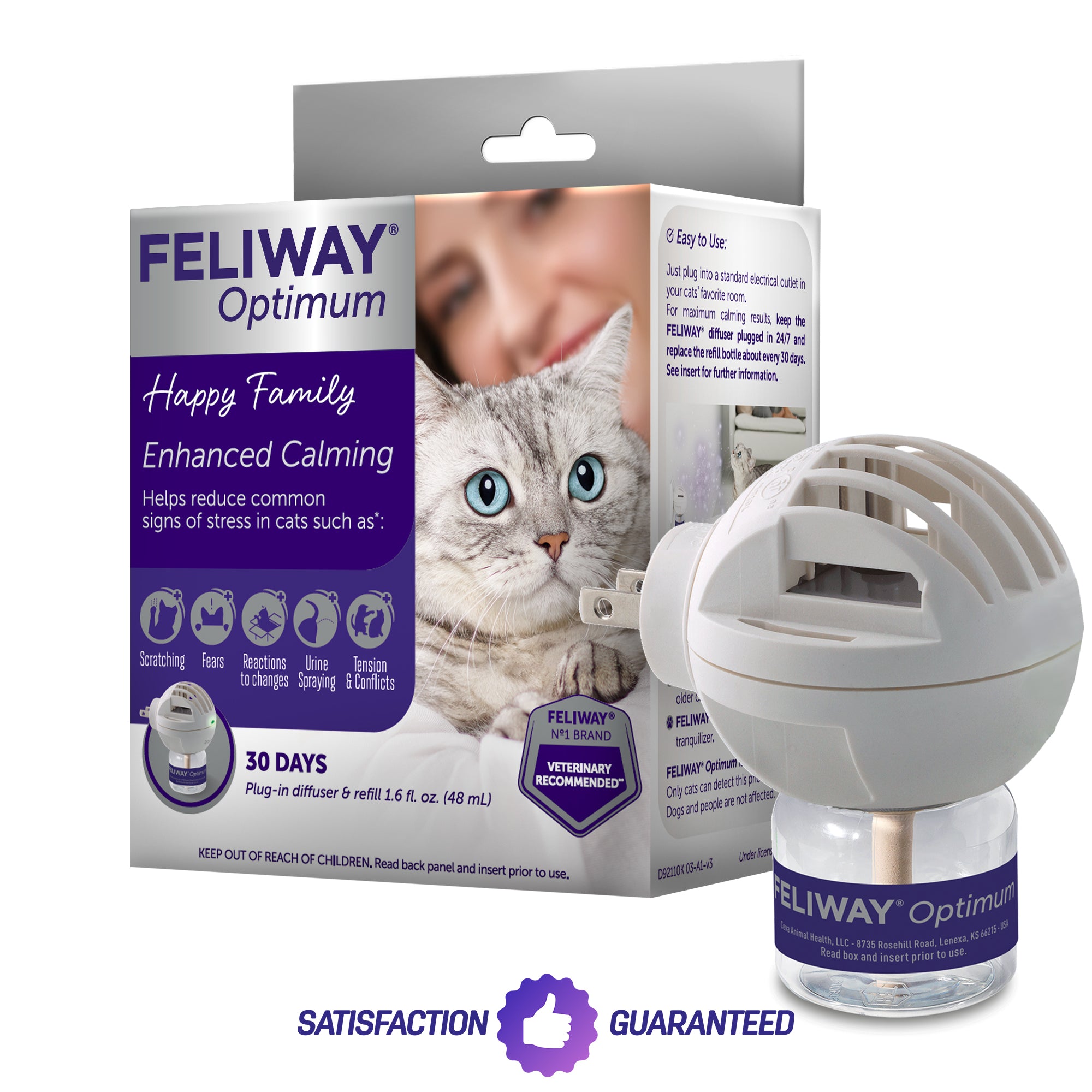
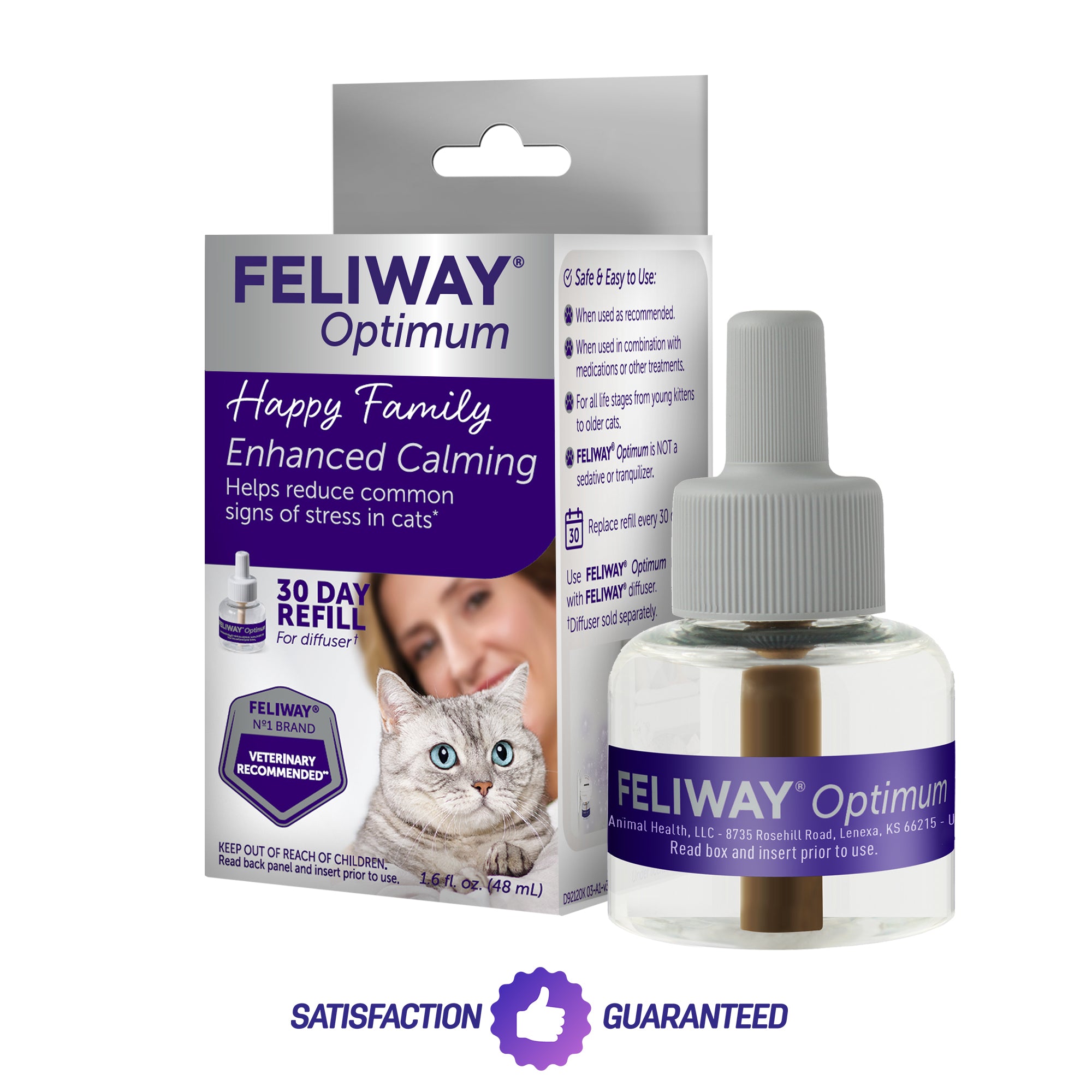
Although not simply a scent, pheromones can be useful by sending messages that make cats feel more secure in their environment. FELIWAY® Optimum plugged in to your cat’s favorite room can help soothe their environment.

Using 3D Space
Finally, don’t stress if you don’t have much floor space for your cat(s). Think vertically! Elevation and getting up higher means more to cats. You don’t need to make expensive, permanent changes to your house. Small adjustments can go a long way in helping a stressed cat. Here are some simple tips:
-
Clear spaces on a bookshelf for your cat to explore and rest.
-
Place a tall cat tree near a window or on shelving.
-
Make elevated spaces comfortable with cat beds or towels, but always use non-slip mats underneath!
-
If your cat jumping up in the kitchen is an issue, teach them to sit on a bar stool instead and reward them for staying there. My cat Mittens knows the cue ‘On Your Stool!’. This allows curious kitties to be elevated and involved without any safety concerns.
Helping a cat affected by stress doesn’t have to take huge effort or cost the earth. Small changes can make a big impact on their happiness.
For more fascinating insights from Channy and all of our Happy Cat Experts, keep exploring our articles online! You can also sign up to our newsletter to receive all the latest updates straight into your inbox.